Persistent Agent
A agent framework for artificial life with self-goal generation and continual learning capabilities.
I am Mingyang Sun (孙铭洋).
I am a Ph.D. candidate in Artificial Intelligence at the Shanghai Innovation Institute (SII), under the supervision of Prof. Weinan Zhang and Prof. Cewu Lu. Concurrently, I am a joint Ph.D. student at Zhejiang University – Westlake University, under the supervision of Prof. Donglin Wang at the Machine Intelligence Laboratory (MiLAB). I previously earned both my M.S. and B.S. degrees in Computer Science and Technology from Dalian University of Technology.
Research: My current research lies at the intersection of Embodied AI and Intelligent Agent, with a focus on building embodied systems that achieve long-term autonomy in open-ended environments. I investigate how perception, action, memory, and decision-making can be integrated into a unified framework to support a consistent sense of self in embodied agents. Reinforcement Learning (RL) has been a core methodological foundation of my work since my master’s studies. Building upon RL, I explore mechanisms such as long-horizon learning and embodied interaction to advance scalable and adaptive robotic intelligence.
Pillar 1: Digital Gene
Pillar 2: Persistent Agent
Pillar 1: Generative Policy Optimization
Pillar 2:Multi-Agent Reinforcement Learning
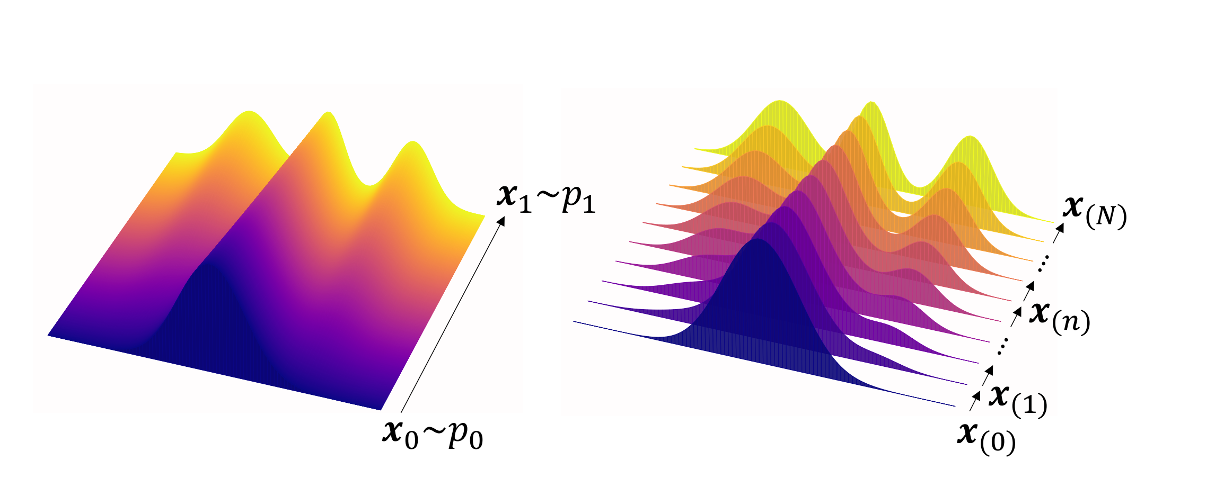
Mingyang Sun, et al. “Score-Based Diffusion Policy Compatible with Reinforcement Learning via Optimal Transport.” Proceedings of the International Conference on Machine Learning (ICML 2025)
Mingyang Sun, et al. “Co-speech Gesture Synthesis by Reinforcement Learning with Contrastive Pre-trained Rewards.” Proceedings of the IEEE/CVF Conference on Computer Vision and Pattern Recognition (CVPR 2023).
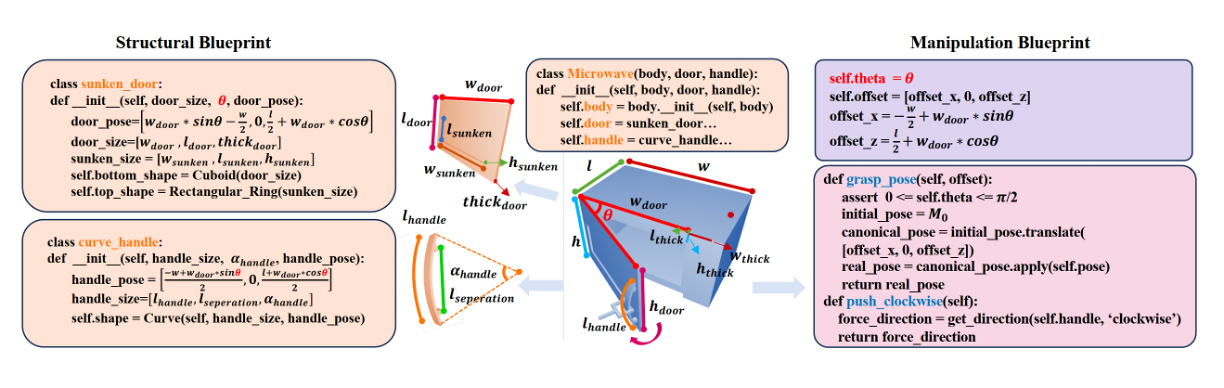
Mingyang Sun, et al. “Empowering Precise Embodied Agents with Executable Analytic Concepts as Semantic-Physical Blueprints” the 35th International Joint Conference on Artificial Intelligence (IJCAI 2026)
Mingyang Sun, et al. “Improving Cooperative Multi-Agent Exploration via Surprise Minimization and Social Influence Maximization” the 22nd International Conference on Autonomous Agents and Multiagent Systems (AAMAS 2023)
Mingyang Sun, et al. “Memetic Multi-agent optimization with Problem Reformulation by Coordinate Rotation,” *2020 IEEE Congress on Evolutionary Computation * (IEEE CEC 2020)
Yaqing Hou†, Mingyang Sun†, et al. “A Multi-agent Cooperative Learning System with Evolution of Social Roles” IEEE Transactions on Evolutionary Computation (导师共一) 中科院1区, IF:14.3
Yaqing Hou, Mingyang Sun, et al. “Behavior Reasoning for Opponent Agents in Multi-agent Learning Systems,” in IEEE Transactions on Emerging Topics in Computational Intelligence 中科院2区
Mingyang Sun, et al. “Sophia: A Persistent Agent Framework of Artificial Life.” arXiv:2512.18202 (1st Author)
“Multiform Evolution for High-Dimensional Problems with Low Effective Dimensionality.” arXiv:2401.00168 (1st Author)
“Explicit Spatial Guidance from Object-Centric Concept Analysis for Vision-Language-Action Model Fine-Tuning.” Under Review for ECCV 2026. (1st Author)
“Integrating Analytical Physics with LLM-Guided Reward Evolution in Reinforcement Learning.” Under Review for IEEE TEVC. (1st Author)
“Iterative Refinement of Flow Policies in Probability Space for Online Reinforcement Learning.” Under Review for ICML 2026. (1st Author)
“Reward-Aligned Imagination with Analytic Concepts in World Models.” Under Review for ICML 2026. (Co-first Author)
“Object-Aware Schrödinger Bridge Matching for Visuomotor Policy Learning” Under Review for ECCV 2026. (1st Author)